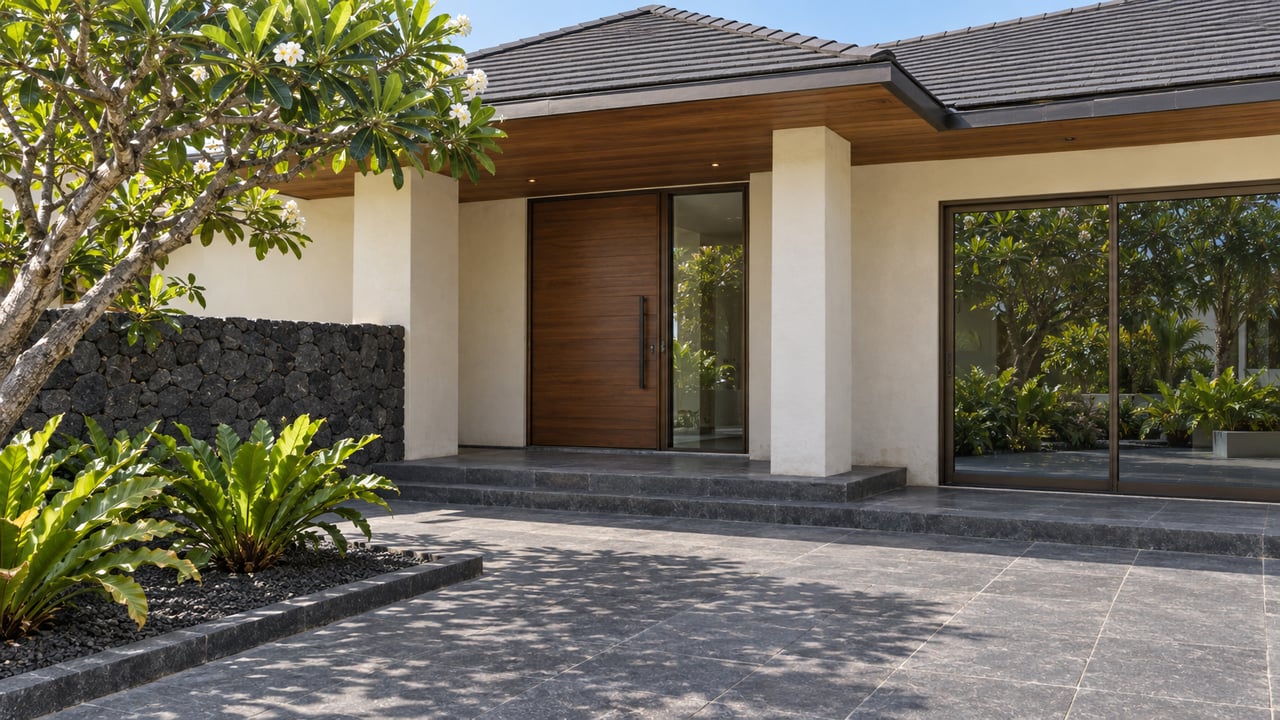
On August 15, Hurricane Lala passed roughly 30 miles off the southern tip of the Big Island. The worst of it landed in Kaʻū: homes pushed off their foundations in Naalehu and Waiohinu, one death, a federal disaster declaration that followed within ten days. Up the coast in Kūkiʻo, behind the gatehouse on Kukio Nui Drive, the storm's effects were reported as modest. Roofs held. The beach club reopened on schedule.
None of that changes what a seller in Kūkiʻo has to put in writing this fall.
The clock that started on August 15, not the wind
Hawaii's disclosure law, HRS Chapter 508D, requires sellers to give buyers a written statement of every material fact they know about a property before a contract is signed. The Hawaii Association of Realtors defines a material fact as anything that would measurably affect what a reasonable buyer would pay, whether or not it involves visible damage. Brittani.ai says the law also has a second, less-discussed requirement: if a seller already delivered a disclosure statement and something new surfaces afterward, a roofer's note, an insurer's reinspection request, a maintenance memo from the club, the seller has to amend it rather than wait to see if anyone asks.
That duty doesn't require the storm to have touched the house. Lala's offshore passage is exactly the kind of event that puts a listing on notice: new information may be circulating, inspections may be getting a second look, insurers may be asking different questions than they did in July. Whether a single tile moved on a given roof is beside the point. The obligation to update the file runs on timing, not proximity.
Kūkiʻo's roofs were already a topic before Lala had a name
Six weeks before Lala existed as a tropical wave, Lava Roofing Kona completed a project in the Kukio area and began offering free assessments across West Hawaiʻi, citing issues tied to the island's coastal exposure. The Kona-Kohala Chamber of Commerce ran the item on June 30, framed as hurricane-season preparation.
That timeline matters for anyone touring Kūkiʻo now. Any roof scope, invoice, or assessment connected to that spring work is part of a property's documented history whether the home has changed hands since or not. The useful question for a buyer isn't whether a home suffered storm damage. It's narrower and more answerable: has this roof had a coastal-conditions assessment in 2026, and if so, is that report attached to the seller's disclosure?
The second packet buyers forget to ask for
Kūkiʻo runs as a private, member-owned club community with 24-hour gatehouse security, not a subdivision with an HOA newsletter. Hawaii's own disclosure form accounts for that structure directly: when a property sits inside a planned community, the required package includes the community's governing declaration and association documents, not only the seller's personal answers about the house itself.
In a gated resort neighborhood, that second packet can carry club infrastructure notes, road and drainage records, and any post-storm assessments the association commissioned on its own timeline, separate from what an individual seller controls. A buyer who reviews only the seller's personal disclosure and skips the association documents has read half the file.
Here's how the two tracks compare on either side of August 15:
| Escrow Item | Before August 15, 2026 | After August 15, 2026 |
|---|---|---|
| Personal disclosure statement | Valid once signed within the required window before the offer | Still valid, but any new material fact requires a written amendment |
| Roof and coastal condition | Reflects whatever inspection existed at listing | Any new report, insurer request, or club notice has to be added to the file |
| Association or club documents | Attached once, typically at listing | Worth confirming the association hasn't issued a storm-related notice since |
Why the math changes at eight figures
Kūkiʻo closed two sales the same day in June at $21,999,999 and $9,999,999, and another in March at $6,800,000. At those prices, a disputed roof condition or a disclosure that never got amended isn't a five-figure repair credit worked out at the table. Nolo says Hawaii gives buyers a two-year window to bring a claim after closing if a disclosure turns out to have been inaccurate. The statute treats a $700,000 condo and a $22 million estate the same way. The cost of getting the paperwork wrong does not.
What actually belongs in the file
For sellers listing in Kūkiʻo or Kaʻūpūlehu this fall:
- Confirm your disclosure statement was signed within the window Hawaii law requires relative to when you accept an offer.
- If anything has changed since you signed it, a roof note, an insurance request, a memo from the club, put it in writing and deliver an amendment.
- Ask the association for current maintenance and any storm-related notices and attach them to what goes to the buyer.
For buyers under contract or touring listings:
- Ask directly whether a 2026 roof assessment exists for the property, not only whether it suffered damage.
- Request the association's governing documents and any communications sent after August 15 as their own item, separate from the seller's personal disclosure.
- Know that you generally have 15 calendar days from receiving a disclosure statement, original or amended, to review it and walk away in writing if something in it changes your decision.
A couple of questions worth settling upfront
Does a home need storm damage for the disclosure to change? No. The amendment requirement under Hawaii law is triggered by a new material fact reaching the seller's knowledge, not by physical damage to the property. A roof report, an insurer's request, or a club notice issued after a disclosure statement was signed can each be enough on its own.
How long do I have to review a disclosure statement before I'm locked in? The state's own disclosure form gives buyers 15 calendar days from receipt to examine it and rescind the contract in writing if needed. That clock applies to an original statement and to any amendment that follows it.
This is general information about how Hawaii's disclosure framework works, not legal advice, and anyone with a live transaction should confirm specifics with their agent, escrow officer, or an attorney licensed in the state.
If you're weighing a sale in Kūkiʻo this season, or you're a buyer trying to work out exactly what belongs in a disclosure file before you sign anything, Lovette Llantos and her team handle this kind of detail as a matter of course, not as an afterthought. Get Your Free Home Valuation and start the conversation with someone who already knows what the paperwork should say.