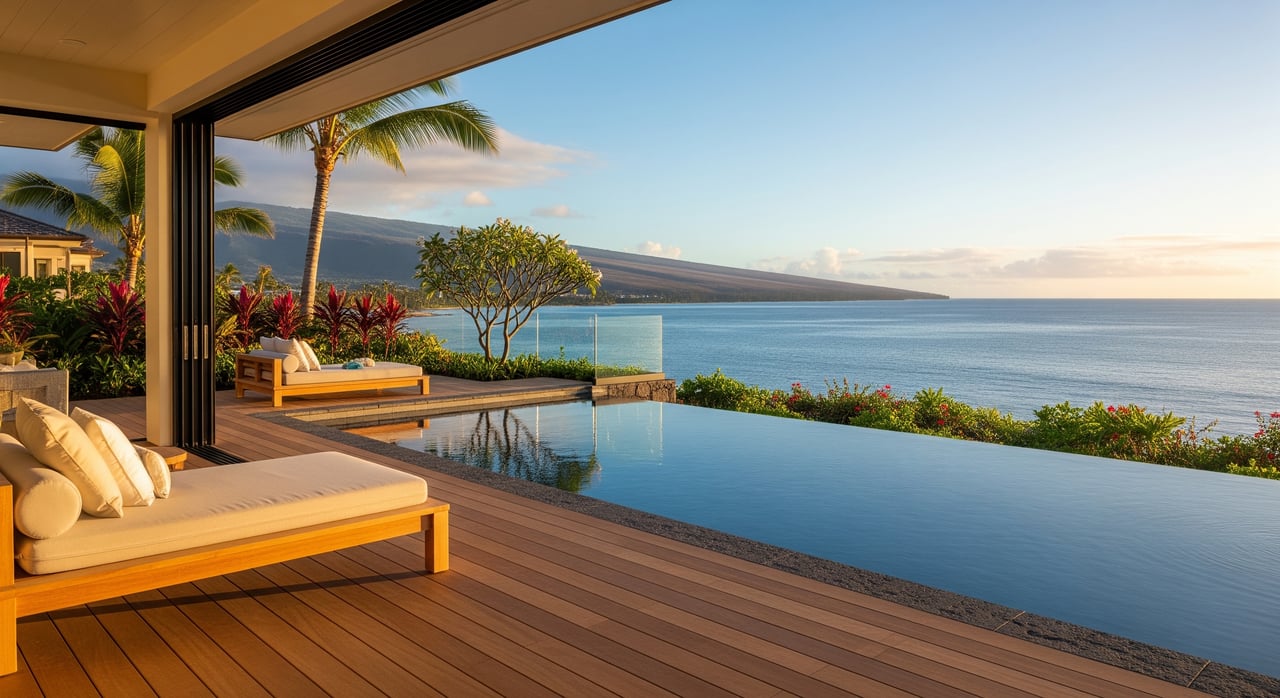
Do you picture your days in Kailua-Kona starting with a barefoot beach walk or a cool morning on a hillside lanai? Both oceanfront and mauka living offer incredible Big Island lifestyles, but the daily experience can feel very different. You want clarity before you choose, from comfort and maintenance to rules, utilities, and long-term costs. This guide walks you through the real-world tradeoffs so you can move forward with confidence. Let’s dive in.
Oceanfront vs mauka at a glance
- Oceanfront: Direct ocean access, sunset views, walkability to Ali‘i Drive, and vibrant energy. Expect more salt exposure, tourist activity, and potentially higher insurance and HOA costs.
- Mauka: Cooler air, greener surroundings, larger lots, and a quieter residential feel. Expect more rain in some spots, more vegetation care, and longer drives to the beach.
Microclimates and daily comfort
Temperature and breeze
At the coast, daytime highs often sit in the low 80s Fahrenheit. As you go mauka, you can expect a few degrees cooler. Trade winds help moderate heat, and oceanfront sites can feel breezier.
Rain and vegetation
Rainfall generally increases with elevation as moist air rises along the slopes. Some pockets receive more frequent showers, which support lusher landscaping and more shade. Microclimates can shift block by block, so the exact lot position matters.
Light and views
Oceanfront homes enjoy unobstructed ocean views and easy sunsets. Mauka homes can capture broad panoramas of the coastline and sky, plus sunrise or morning sun depending on orientation. Tree cover can frame or limit views unless the site sits higher or is thoughtfully cleared.
Lifestyle and access
Oceanfront rhythms
If you want to snorkel, paddle, or stroll by the water without getting in a car, oceanfront delivers. You are closer to cafes, shops, and beach spots, especially along Ali‘i Drive. You will also feel seasonal tourism, nightlife, and traffic more directly.
Mauka pace
Mauka neighborhoods offer privacy, birdsong, and starry nights. You may have more space for gardens or a small orchard. Drives to beaches are longer, but many hillside homes trade that for quiet streets and expansive views.
Maintenance and long-term care
Salt and corrosion near the water
Salt spray accelerates rust and wear on metal fixtures, railings, exterior systems, and even roof coatings. Many owners use marine-grade materials and schedule more frequent exterior painting and inspections. Expect a tighter maintenance cadence to protect finishes and equipment.
Moisture, mold, and pests mauka
Higher elevation and vegetation can raise humidity around the home. Good drainage, ventilation, and landscaping help manage mold risk. Mosquito activity can increase where water pools or plants are dense, so regular yard care is important.
Termites and island-wide best practices
Termite risk exists in both settings. Plan for routine inspections and construction details that deter pests. This is standard home stewardship across the island.
Hazards, rules, and insurance
Coastal hazards and shoreline rules
Oceanfront properties face storm surge, higher waves during storms, and long-term sea level rise. Shoreline improvements and hardening can be tightly regulated, and shoreline setbacks or public access obligations may apply. Before planning improvements, confirm the shoreline determination and permitting path.
Lava and wildfire context
Kailua-Kona is generally at a lower lava hazard than parts of East Hawai‘i, but you should still review current maps for any specific parcel. In dry seasons, upland grasses and brush can increase wildfire risk, so vegetation management and defensible space matter.
Insurance expectations
Oceanfront properties may require higher or additional coverage, such as wind or hurricane policies and flood insurance if located in a Special Flood Hazard Area. Insurers can ask for mitigation features like hurricane straps or impact-resistant windows. Mauka homes may see lower flood exposure but should still evaluate wildfire considerations and access factors.
Utilities, HOAs, and connectivity
Water and wastewater
Many in-town and near-coast neighborhoods connect to County water and sewer. Some mauka or rural parcels may use septic systems, private wells, or rainwater catchment. Confirm service and permits, and review system condition during due diligence.
Power and internet
Hawai‘i Island can experience outages during storms, so many owners add solar plus battery for resilience. Internet speeds and fiber availability vary by neighborhood. Check providers for your exact address before you write an offer.
HOAs and short-term rentals
Oceanfront inventory often includes condos and resort-style properties with HOAs that cover exterior upkeep, common insurance, and amenities. Dues can be higher for oceanfront assets. Rules may limit pets, renovations, or short-term rentals, and county regulations continue to evolve. Many mauka single-family neighborhoods have low or no HOA fees, though gated communities or private roads may carry association or road maintenance agreements.
What you’ll find by elevation
- Oceanfront and coastal strip, 0 to 50 feet: Low and mid-rise condos, boutique resorts, and a handful of luxury single-family homes. Premiums reflect views and immediate access. Expect stronger salt exposure and potentially higher insurance.
- Lower mauka, 50 to 400 feet: Single-family homes on smaller lots and older infill areas on older lava flows. Many enjoy County utilities and shorter drives to town. View quality varies with slope and orientation.
- Mid mauka, 400 to 900 feet: Larger lots, gated subdivisions, and homes designed for panoramic ocean views. Cooler air and more vegetation are common. Microclimates can shift, and some parcels may sit on steeper slopes.
- Upper mauka, 900 feet and above: Rural feel, small farms, and estate-sized parcels. Cooler conditions and longer drives define the lifestyle. Some sites may require onsite wastewater or different zoning considerations.
Costs and value considerations
- Oceanfront price per square foot often runs higher due to the view premium and walkability. Factor in exterior maintenance, potential insurance add-ons, and HOA dues.
- Mauka properties can deliver more land and interior space per dollar. Balance the savings with vegetation care, potential moisture management, and drive time to the beach.
- The value of any home in Kona depends on the specific microclimate, view corridor, road access, and utility setup. The small details matter.
A practical buyer checklist
- Location and microclimate: Note elevation, slope aspect, and wind exposure. Ask about typical rainfall for that pocket.
- Views and access: Confirm legal beach access and nearby public access. Time your drive to groceries, medical services, schools, and the airport.
- Hazards and permitting: Check flood zone status. For oceanfront, confirm shoreline determination, setbacks, and any access easements. Review County and State permits for past work and open violations. Confirm lava and wildfire hazards.
- Utilities and services: Verify County water and sewer or assess septic or catchment permits and condition. Confirm electric service reliability, internet options, trash service, and who maintains private roads.
- Building condition: For oceanfront, inspect for corrosion, roof life, deck integrity, and salt-proofing measures. For mauka, review drainage, ventilation, tree root or slope issues, and pest reports.
- Insurance and monthly costs: Get quotes for homeowners, wind or hurricane, and flood if applicable. Ask for recent utility bills, HOA dues, and key maintenance invoices. Review HOA budgets and reserve studies where relevant.
- Rental and use rules: Confirm zoning, short-term rental eligibility, HOA bylaws, and tax obligations if income matters to you.
Which lifestyle fits you?
Choose oceanfront if your ideal day revolves around the water, sunset watching, and walkability to Ali‘i Drive amenities. Plan for a proactive maintenance schedule and possibly higher insurance and HOA dues. Choose mauka if you value cooler evenings, privacy, space for gardens, and wide ocean views from above. Plan for more vegetation management, potential morning clouds, and a short drive to the beach.
If you want clarity tailored to your short list, connect with a local advisor who lives these tradeoffs every day. For white-glove guidance, curated options, and confident negotiations, reach out to Lovette Llantos.
FAQs
What is the main weather difference between oceanfront and mauka in Kailua-Kona?
- Oceanfront is sunnier and warmer, while mauka areas are a few degrees cooler with more frequent cloud cover and higher rainfall depending on elevation and orientation.
Do oceanfront homes in Kailua-Kona usually need flood insurance?
- Only if the property sits in a FEMA Special Flood Hazard Area, but many oceanfront owners still carry added wind or hurricane coverage after reviewing risks and lender requirements.
Will I need more air conditioning at the coast than mauka?
- Often yes, because oceanfront areas can feel warmer with more direct sun and less shade, while mauka elevations are typically cooler and may need AC less often.
Are HOA fees higher for oceanfront properties?
- Many oceanfront options are condos or resort-style communities with amenities and common insurance, which can translate to higher dues than fee-simple mauka neighborhoods.
Is solar with battery backup worthwhile in Kailua-Kona?
- Many owners add solar plus batteries for resilience during storms and outages; feasibility depends on roof orientation, shading, and utility interconnection for the specific address.
What should I inspect first when buying oceanfront vs mauka?
- For oceanfront, prioritize corrosion, roof and deck condition, and salt-proofing. For mauka, focus on drainage, ventilation, slope stability, and pest or moisture issues.