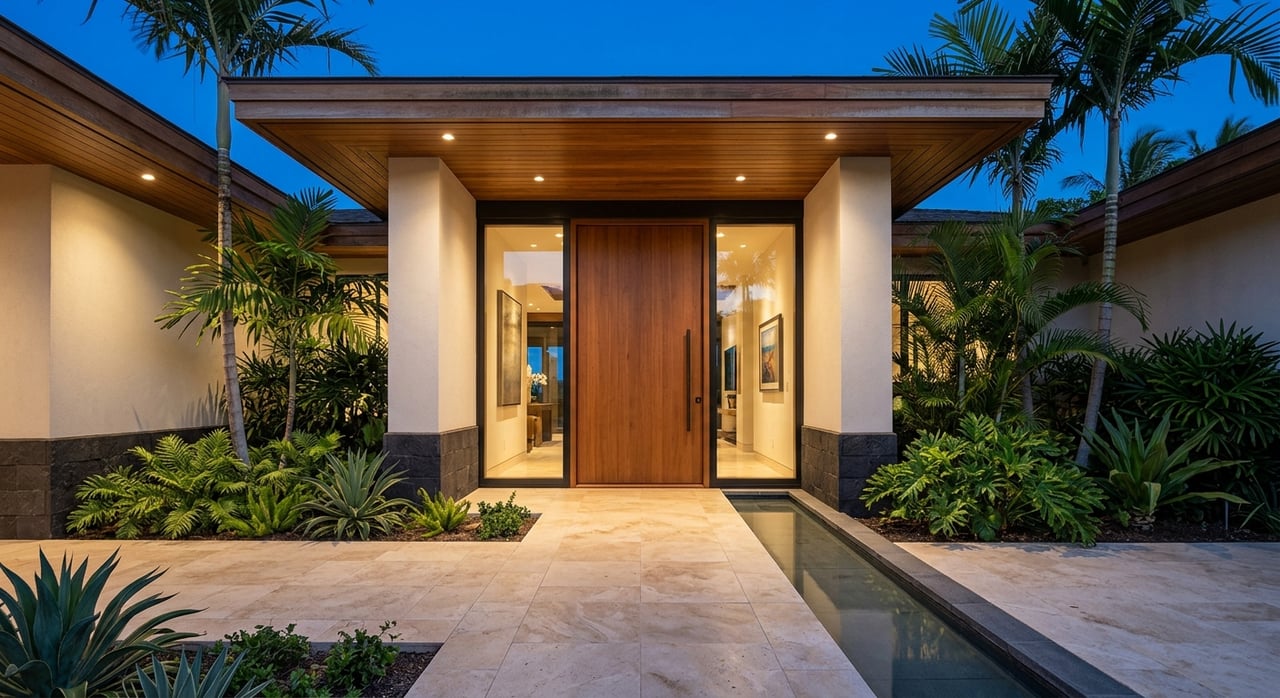
If you are exploring a purchase in Kohanaiki, financing may look very different from a typical home loan. With asking prices on Kohanaiki properties ranging from $2.2 million to $23.5 million on the community’s public site, many buyers quickly find that standard conforming financing is not the path forward. The good news is that with the right planning, you can approach these purchases with clarity, stronger negotiating power, and fewer surprises in escrow. Let’s dive in.
Why financing works differently in Kohanaiki
Kohanaiki is a private, 450-acre club community on the Kona coast with amenities that include a 67,000-square-foot clubhouse, a 1.5-mile members' beach, golf, spa, and dining, according to Kohanaiki’s official website. Its featured properties sit firmly in the luxury tier, which changes the financing conversation from the start.
For 2026, the FHFA conforming loan limit for Hawaii is $1,873,675. Since Kohanaiki’s current featured listings begin above that range, most financed purchases will likely require jumbo or portfolio lending, not a standard conforming agency mortgage.
That matters because jumbo and portfolio loans often bring more customized underwriting, more documentation, and a more detailed review of your assets, income, and ongoing obligations. In a club setting like Kohanaiki, lenders may also pay close attention to dues, membership structure, and how the property is classified for underwriting purposes.
What buyers should expect from preapproval
A preapproval is an important early step, but it is not the same as a final loan commitment. The Consumer Financial Protection Bureau explains that a preapproval letter helps show a seller you are likely able to obtain financing, while also noting that lenders can ask for additional verification later in the process.
In practice, that means you should be ready to provide updated bank statements, tax returns, and other financial records after your offer is accepted. If your income is self-employed, seasonal, investment-based, or otherwise irregular, underwriters may ask for even more documentation before issuing final approval.
For luxury buyers, that extra review is normal. It does not necessarily signal a problem. It simply reflects the larger loan size and the fact that these purchases often involve more complex financial profiles.
When portfolio loans may come into play
In communities like Kohanaiki, portfolio lending can be especially relevant. Chase’s explanation, cited by the CFPB resource above, notes that portfolio loans are held by the lender rather than sold into the secondary market, which allows more case-by-case underwriting in nontraditional or more complex situations.
That flexibility can be useful if your purchase involves unique membership obligations, substantial reserves, nontraditional income sources, or other details that do not fit neatly into agency guidelines. At the same time, buyers should know that portfolio loans can come with higher rates and more tailored approval standards.
The takeaway is simple: financing luxury property in a private club is often less about finding a one-size-fits-all mortgage and more about matching the property and your financial profile to the right lending structure.
Why club dues affect loan qualification
In resort and club communities, dues are not just part of the lifestyle picture. They can directly affect your financing.
Fannie Mae’s Selling Guide requires lenders to include owners’ association or project dues in the monthly housing expense used to calculate debt-to-income ratio. In other words, your qualifying payment may be higher than just principal, interest, taxes, and insurance.
Fannie Mae also states that condo and co-op projects with mandatory memberships requiring dues to a third-party golf or recreational facility may be ineligible for sale to Fannie. For buyers, that can shift financing away from agency execution and toward a portfolio or other non-agency option.
This is one reason private club purchases deserve careful review before you write an offer. Monthly carrying costs and membership structure can change not only affordability, but also which loan products are available.
How membership structure can change the financing path
Kohanaiki’s public site describes the club as a private equity club that is by invitation only to Kohanaiki property owners. It also shows that some listings may include club membership in the sales price, such as 18 Maia Loop.
That detail matters because club communities on the Kona and Kohala coasts are not all structured the same way. For example, Kohanaiki may include membership with certain offerings, while other private clubs may treat membership separately or impose distinct dues and qualification requirements.
The research shows clear differences among comparable communities:
- Kohanaiki: invitation-only private equity club for property owners, with some listings indicating membership is included in the sales price
- Kūkiʻo: membership is exclusive to residents of Kūkiʻo, Maniniʻōwali, and Kaʻūpūlehu
- Hualālai: membership is available only to property owners and is not included with the purchase of any property
- Hokuliʻa: a current listing reflects $3,230 per month in club dues plus $996 per month in HOA charges
For a buyer, these differences can impact underwriting, monthly payment calculations, and overall offer strategy. A home with bundled membership may be evaluated differently from one where club access, transfer, or dues sit outside the core purchase structure.
Cash, liquidity, and proof-of-funds strategy
Not every luxury buyer uses financing alone. Some buyers purchase with cash, while others make liquidity-backed offers and decide later how to structure the acquisition.
According to Bankrate’s proof-of-funds overview, sellers typically want a proof-of-funds letter for cash transactions to verify liquid assets. Bankrate also notes that proof of funds is different from preapproval: preapproval supports a financed offer, while proof of funds helps support a cash or liquidity-backed offer.
In high-value markets, offer readiness matters. Sellers may not fully treat an offer as secure until funds are verified, so having documentation lined up before you negotiate can help reduce friction and improve your credibility.
CFPB also notes that closing funds are usually delivered by wire transfer or cashier’s check, not literal cash. That sounds basic, but it is another reminder that luxury transactions still depend on clean, verifiable documentation and timing.
Earnest money in competitive luxury offers
Earnest money is another part of showing strength. The National Association of Realtors, as cited in the research, notes that earnest money is common in competitive markets and typically ranges from 1% to 10% of the purchase price.
At Kohanaiki price points, that can represent a substantial amount. Buyers should be prepared for earnest money expectations that align with the scale of the transaction and the competitiveness of the property.
This is where preparation becomes practical. If your lender, private banker, or wealth advisor is aligned before you offer, you are better positioned to move quickly, document funds clearly, and avoid last-minute stress.
A smart financing checklist for Kohanaiki buyers
Before you pursue a luxury property in Kohanaiki or a similar private club, it helps to get organized around the items underwriters and sellers are most likely to focus on.
Prepare your financing file
- Request a current preapproval if you plan to finance
- Gather recent bank and brokerage statements
- Have tax returns and income documentation ready
- Expect updated verification later in escrow
- Plan for additional review if your income is self-employed or irregular
Review the full monthly cost
- Estimate principal and interest
- Confirm property taxes and insurance
- Review HOA dues
- Review club dues or membership-related obligations
- Ask how those costs may affect debt-to-income calculations
Strengthen your offer position
- Secure proof of funds for any cash component
- Clarify your earnest money strategy early
- Understand your timing for wiring funds at closing
- Work with professionals who understand private club transactions
Why local guidance matters in club communities
Luxury purchases in Kohanaiki are not only about price. They are about structure, timing, documentation, and understanding how a private club setting can affect financing choices.
That is why local guidance matters. When you are comparing homesites, residences, or club communities along the Kona and Kohala coastlines, you want a clear view of how membership, dues, and underwriting may affect both your budget and your negotiating strategy.
With thoughtful preparation, financing a purchase in Kohanaiki can be highly achievable. The key is going in with the right expectations, a strong documentation package, and a strategy that matches the realities of luxury and club-based ownership.
If you are weighing a purchase in Kohanaiki or another private club community on Hawaiʻi Island, Lovette Llantos can help you navigate the process with informed, white-glove guidance from search to closing.
FAQs
What type of loan is most common for a Kohanaiki home purchase?
- Because Kohanaiki listings currently range from $2.2 million to $23.5 million and exceed Hawaii’s 2026 conforming loan limit of $1,873,675, many financed purchases are more likely to use jumbo or portfolio loans.
What does preapproval mean for a Kohanaiki financed offer?
- A preapproval helps show a seller that you are likely able to get financing, but it is not a final loan commitment and lenders may still request updated financial documents later.
How do club dues affect financing in private communities like Kohanaiki?
- Lenders may include HOA and certain project dues in your monthly housing expense for debt-to-income calculations, which can affect both loan qualification and monthly affordability.
Can club membership change loan eligibility for a luxury property?
- Yes. Based on Fannie Mae guidance, mandatory memberships and related dues can affect whether a loan fits standard agency guidelines or needs a portfolio or non-agency solution.
What is the difference between proof of funds and preapproval for a luxury offer?
- Preapproval supports a financed offer, while proof of funds shows liquid assets and is generally the document sellers want to see for cash or liquidity-backed offers.
How much earnest money should you expect for a Kohanaiki purchase?
- Earnest money is common in competitive markets, and research cited here notes that it typically ranges from 1% to 10% of the purchase price.