If you are dreaming about a custom home on the Kona Coast, buying the right lot in Hokuliʻa may be the most important decision you make. This is not just about finding a view you love. It is about choosing a homesite that matches your timeline, design goals, budget, and the kind of island lifestyle you want to create. If you are considering land here, this guide will help you understand what to look for before you buy. Let’s dive in.
Why Hokuliʻa Stands Out
Hokuliʻa is a private gated community on Hawaiʻi Island’s Kona Coast with 1,260 acres and about three miles of west-facing shoreline, according to official community information. It sits roughly 30 minutes south of Kona International Airport, which makes it accessible while still feeling private and tucked away.
For many buyers, the appeal starts with space and views. Hokuliʻa’s homesites generally range from 1 to 2 acres, and the community offers the option to buy a finished home or build a custom residence. If you want control over architecture, orientation, outdoor living, and view lines, a lot purchase can open the door to a much more personalized result.
What You Are Really Buying
When you buy a lot in Hokuliʻa, you are buying more than land. You are also buying into a specific planning framework, a private club setting, and a long-term lifestyle vision.
The community highlights amenities that include clubhouse dining, spa facilities, tennis, fitness, hiking trails, viewing platforms, picnic areas, a canoe landing, shoreline access, and a Jack Nicklaus Signature golf course. For many luxury buyers, these features are part of the value equation just as much as the homesite itself.
There is also an agricultural component that makes Hokuliʻa different from many other luxury communities. According to Hokuliʻa’s lifestyle information, lots are subject to an agricultural easement, and owners may grow, harvest, and market produce with help from the community association. That can shape how you think about orchard space, landscaping, privacy buffers, and the overall layout of your future estate.
Compare Hokuliʻa Lot Types
Not all Hokuliʻa lots offer the same building experience. Based on recent community and property information, three patterns show up often: hillside or fairway parcels with broad coastline views, level or gently sloping corner and cul-de-sac lots, and sloped ocean-view parcels that may need more site work.
Here is a simple way to think about them:
| Lot type | Typical strengths | Key watchpoints |
|---|---|---|
| Hillside or fairway lots | Wide coastline views, elevated perspective, strong sunset orientation | May involve grading, retaining, and more complex design work |
| Level or gentle-slope lots | Easier site planning, smoother path to design, potentially lower early site costs | View corridors may depend more on exact placement and neighboring improvements |
| Sloped ocean-view lots | Dramatic outlooks and strong architectural potential | Higher site prep complexity and potentially higher construction costs |
For example, Lot 119 in Mahea Lani is described as a 2.247-acre end-of-cul-de-sac homesite at 430 feet elevation overlooking the 12th fairway. Lot 59 is presented as a 1.59-acre corner parcel with ocean, city, and golf-course views and level terrain. Lot 244 is a 1.39-acre sloped parcel with Kona coastline views.
Mahea Lani vs. Nalu Kai
Phase location matters when you are buying for a custom build. Mahea Lani, also called Phase 1, is described by the community as the first development within Hokuliʻa and sits on the elevated slopes of Hualālai. That often means strong view opportunities, but elevation and slope can affect design and site work.
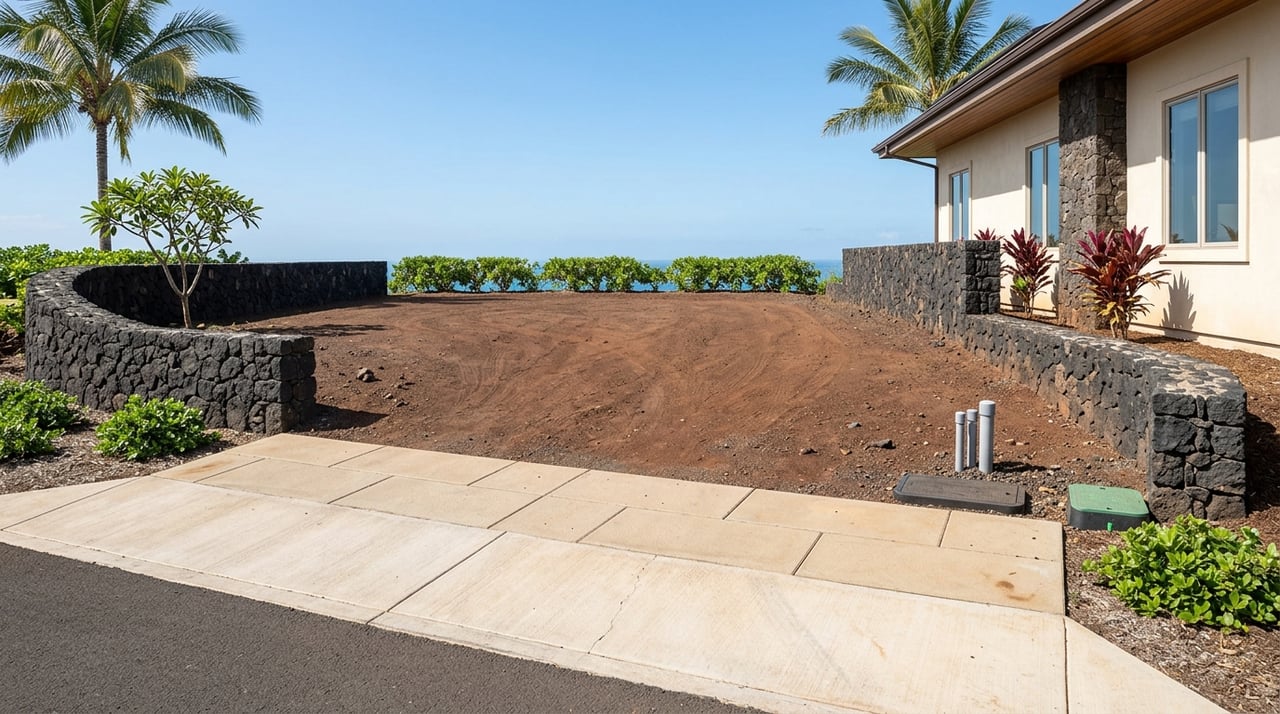
Nalu Kai, or Phase 2, is marketed as an oceanfront and golf-front collection of parcels. The community notes that these lots are padded and ready for construction, with utilities stubbed within the frontage. If your priority is reducing some early development unknowns, that pad-ready status may be worth a close look.
Check Views Beyond the Marketing Photos
In Hokuliʻa, view value can be a major driver of lot desirability. Ocean, coastline, golf-course, and sunset views all carry weight, but the best lot for you depends on how you want to live in the home.
If you want long sunset sightlines, west-facing orientation and elevation can be important. If you prefer a more grounded connection to the course or shoreline, you may lean toward golf-front or near-ocean parcels. Corner and cul-de-sac lots can also create a different sense of privacy and flexibility in how a home sits on the land.
For shoreline-facing properties, there is another layer to consider. Hokuliʻa states that its shoreline historic park spans 140 oceanfront acres, and Hawaiʻi County’s coastal rules can create added review requirements for shoreline-abutting sites.
Understand Rules Before You Design
One of the biggest mistakes buyers make is assuming that county approval is the whole process. It is not.
Hawaiʻi County explains that subdivision lots may be subject to CC&Rs and association bylaws that regulate buildable area, setbacks, height limits, materials, accessory structures, unit size, and design guidelines. The county also warns that a plan can meet county code and still fail community rules, which is why buyers should confirm requirements early.
The public side matters too. Hawaiʻi County’s zoning and land-use resources make clear that Chapter 25 and the Subdivision Code both play a role in what can be built. In practical terms, your lot must work under both county regulations and Hokuliʻa’s private design standards.
Shoreline approvals can add time
If a parcel abuts the shoreline, your approval path may be more involved. Hawaiʻi County says shoreline-abutting lots must have at least a 40-foot shoreline setback, and some coastal development may also require a Special Management Area use permit.
That does not mean shoreline lots are off the table. It simply means that early due diligence becomes even more important, especially if your goal is to preserve views while creating a home that fits all applicable rules.
Design standards shape the final home
A documented Hokuliʻa residence published by Bruce Owensby Architect describes private standards that can influence building height, roof form, and overall massing. While that example is not a countywide rule, it is a useful reminder that private community standards can affect your design in meaningful ways.
If you are envisioning a certain roofline, terrace layout, or multi-level concept, it is smart to confirm those ideas against Hokuliʻa’s review framework before you move too far into design.
Utilities and Site Work Matter
Luxury lot buyers often focus on views first, then discover that infrastructure differences can materially affect cost and timeline. In Hokuliʻa, recent listings show varying combinations of private water, underground utilities, cable, electricity, and phone service.
Sewer availability can also vary by parcel, from not available to connected, based on recent property details. Even where Phase 2 lots are marketed as pad-ready with utilities stubbed at the frontage, buyers should still verify the exact utility package and any remaining site work for the specific lot they are considering.
Ask for Due Diligence Up Front
Some Hokuliʻa lots come with valuable pre-sale materials that can save time and reduce uncertainty. Recent property pages show examples of topographic surveys, grubbing reports, archaeological survey reports, and even house plans.
These documents can help you understand buildability sooner. They may also make it easier to compare two lots that look similar online but have very different readiness levels in real life.
A strong buyer strategy is to request available due-diligence materials before you commit. That can help you estimate site complexity, understand what has already been studied, and move into design with more confidence.
Budget for More Than the Lot
A Hokuliʻa custom build budget should include more than land price and house construction. Site preparation, grading, retaining, design review, consultants, utility verification, and carrying costs all matter.
For broad Big Island context, a Hawaii Life building article estimates custom-home construction at roughly $300 to $500+ per square foot. In a community like Hokuliʻa, slope, premium finishes, imported materials, and specialized review can push budgets toward the upper end or beyond.
Carrying costs matter too while you plan and build. Recent Hokuliʻa examples show HOA dues ranging from about $908 to $1,089 per month, depending on the parcel and listing.
Plan for a Longer Timeline
If speed is your top priority, buying an existing home is usually simpler. If customization is your top priority, a lot purchase can be worth the extra time.
Hawaiʻi County reports that residential new-construction permits averaged 29 days over the most recent 3-month period and 75 days over the most recent 12-month period for permits not returned for corrections. That is only permit review time. It does not include design, community review, site prep, or construction.
A separate Big Island building overview estimates that a custom home can take about 6 to 24 months from design to completion, with permitting sometimes taking up to a year. Add Hokuliʻa’s review layer and any parcel-specific coastal or grading issues, and your timeline may be longer than you first expect.
Hawaiʻi County also notes that contractor permits expire after three years and owner-builder permits after five years, with work required to begin within 180 days of permit issuance. That makes planning and sequencing important, especially for high-design homes with longer lead times.
Verify Club Membership Details
Buyers are often drawn to Hokuliʻa for its private club lifestyle, but you should never assume membership is automatically included with a lot. Recent property pages show that club membership may be included in one sale and excluded in another.
That is an easy item to clarify early in the process. If membership is central to your decision, make sure the purchase terms state exactly what is included, what is optional, and what costs may apply separately.
Is a Hokuliʻa Lot Right for You?
Buying a lot in Hokuliʻa can be a smart move if you value privacy, lot size, ocean and coastline views, and the chance to shape a home around your lifestyle. It is especially appealing if you want a property that feels tailored to the land rather than chosen from existing inventory.
It may be less ideal if you want a faster move-in timeline or a simpler purchase path. Custom building here can be rewarding, but it works best when you go in with clear expectations and careful due diligence.
If you are weighing Hokuliʻa lots and want a local, high-touch perspective on view value, build readiness, and purchase strategy, connect with Lovette Llantos. You deserve guidance that helps you buy with clarity and build with confidence.
FAQs
What should you look for when buying a Hokuliʻa lot for a custom home?
- You should evaluate slope, view orientation, utility access, sewer status, available due-diligence documents, design restrictions, and whether club membership is included in the sale.
How do Mahea Lani and Nalu Kai differ in Hokuliʻa?
- Mahea Lani is positioned on elevated slopes, while Nalu Kai is marketed as an oceanfront and golf-front collection with pad-ready parcels and utilities stubbed at the frontage.
Do Hokuliʻa lots have building restrictions beyond Hawaiʻi County rules?
- Yes. In addition to county zoning and permit requirements, subdivision lots may be subject to CC&Rs, association bylaws, and design-review standards that can regulate height, setbacks, materials, and more.
Do shoreline lots in Hokuliʻa need extra approvals?
- They can. Shoreline-abutting parcels may be subject to at least a 40-foot shoreline setback, and some coastal development may also require a Special Management Area permit.
Are utilities already installed on every Hokuliʻa lot?
- No. Utility infrastructure varies by parcel, so you should verify the exact water, sewer, electricity, cable, phone, and utility stub status for the specific lot you are considering.
How long does it take to build a custom home in Hokuliʻa?
- Timelines vary, but custom homes on the Big Island can take about 6 to 24 months from design to completion, and Hokuliʻa review requirements or coastal and grading issues can extend that timeline.
Is club membership always included when you buy a Hokuliʻa lot?
- No. Some lot sales include membership and others do not, so you should confirm membership terms before moving forward.