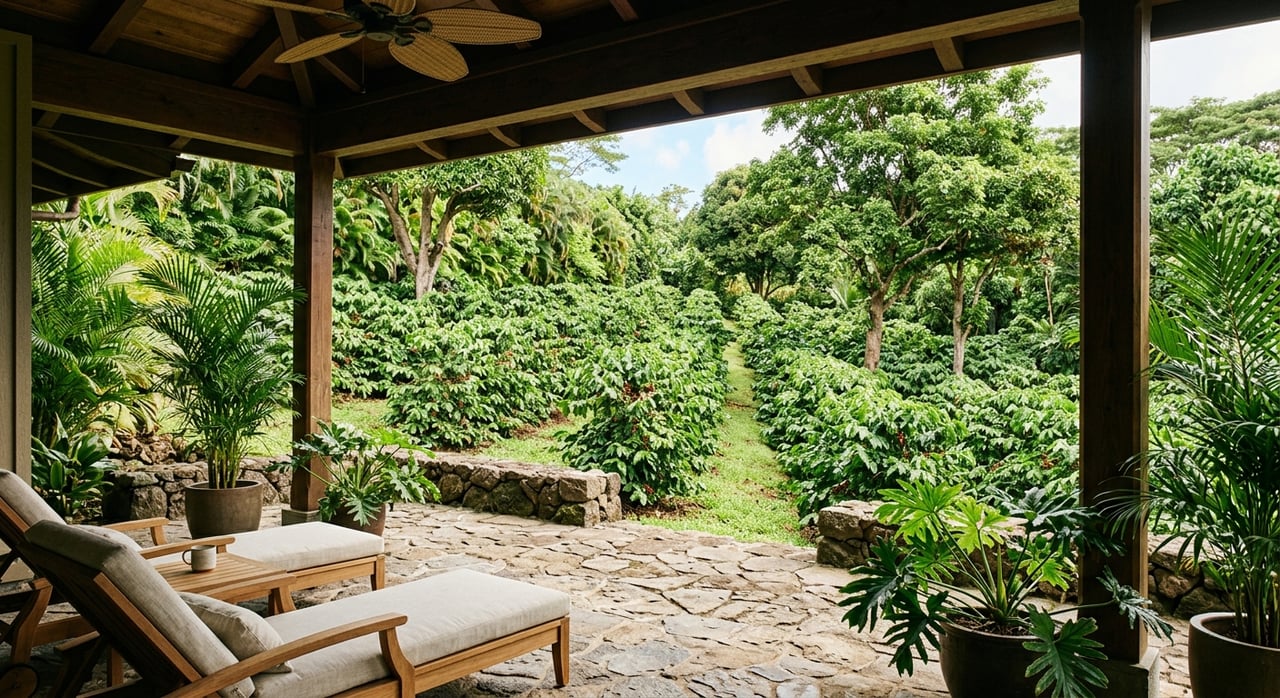
If you picture Hawaiʻi Island living as bright mornings, green hillsides, and a slower pace just above the coast, Kealakekua and Captain Cook may be exactly what you have in mind. These South Kona communities offer a different feel from busier West Hawaiʻi areas, with a rural coffee-country setting, changing elevations, and access to one of the island’s most memorable bays. If you are considering a home here, it helps to understand how the landscape, housing mix, and daily lifestyle come together. Let’s dive in.
South Kona Living at a Glance
Kealakekua and Captain Cook are best understood as small South Kona communities rather than dense towns. Hawaiʻi County community profiles list Kealakekua at 2,307 residents and Captain Cook at 3,253 residents, while the broader South Kona county subdivision covers 329.5 square miles of land.
That scale shapes how the area feels day to day. Captain Cook includes 12.9 square miles of land, which helps explain why the community can feel quiet and spread out while still staying connected to the Kona highway corridor.
For many buyers, that balance is the appeal. You get a more rural setting, but you are still part of the larger West Hawaiʻi market network.
Why Coffee Country Feels Different
South Kona is part of the well-known Kona coffee belt. The University of Hawaiʻi CTAHR describes this belt as a narrow zone about 20 miles long and 2 miles wide, generally between 700 and 2,000 feet in elevation, where rainfall and temperature patterns are especially favorable for coffee.
That same growing environment influences what it feels like to live here. CTAHR’s Kona Research Station in nearby Kainaliu sits at 1,200 to 1,500 feet in elevation, with about 60 inches of annual rainfall and average temperatures around 60°F to 78°F.
In practical terms, your experience can change a lot depending on where a home sits. Lower areas closer to the coast can feel warmer and drier, while upslope areas may feel cooler and more humid.
Elevation Shapes Weather and Views
One of the biggest things to know about Kealakekua and Captain Cook is that elevation matters. The Rainfall Atlas of Hawaiʻi notes that North and South Kona have a distinct pattern, with persistent clouds and rain upslope of the coast that support the coffee region.
For you as a buyer, that means weather can shift quickly as you move mauka and makai. A home tour at one elevation may feel very different from another home just a short drive away.
This slope also affects the visual experience. As you rise above the shoreline, the potential for broad ocean views often improves, while the landscape becomes greener and more layered.
Kealakekua Bay as a Lifestyle Anchor
Kealakekua Bay is one of the area’s strongest lifestyle features. The State of Hawaiʻi Department of Land and Natural Resources identifies it as a marine life conservation district that was established in 1969.
The bay is about 30 minutes south of Kailua-Kona, with access from Highway 11 to the Nāpōʻopoʻo turnoff, then about 4 miles to the bay. Car access is limited to Nāpōʻopoʻo Beach on the eastern shoreline, while Kaʻawaloa Cove and the Captain Cook monument are reached by boat or by the historic upland trail.
That limited access helps preserve the setting. It also means the bay tends to feel more intentional as a destination rather than just another roadside stop.
History, Recreation, and Respect for Place
Kealakekua Bay is important for both recreation and history. DLNR describes the park as the site of the first extensive contact between Hawaiians and Westerners in 1779, with Hikiau Heiau visible from the shore and the Captain Cook monument across the bay.
For many residents and visitors, the bay is also known for marine life and for calm snorkeling and diving conditions when weather allows. Because of its cultural and natural significance, access and use are managed carefully, and visitors are asked to respect the setting.
If you are drawn to South Kona for lifestyle reasons, this is a major part of the story. The area offers scenic coastal access, but in a way that feels rooted in place rather than built around high-density tourism.
What Homes Look Like in Kealakekua and Captain Cook
The housing mix in Kealakekua and Captain Cook is more varied than many buyers expect. Hawaiʻi County planning materials explain that zoning and land use shape what is permitted in Urban and Agricultural classifications, while the state Land Use Commission notes that Rural districts generally allow low-density residential lots and small farms.
An official environmental assessment for a Captain Cook subdivision described the local pattern in simple terms: small house lots give way to small farm lots. That remains one of the clearest ways to picture the area.
Near the highway and village areas, you may find more conventional residential properties. As you move upslope or outward, parcels often become larger and more agricultural in character.
Expect a Range of Property Types
This is not a one-style market. Current market snapshots in the research show everything from single-family homes and condo or townhome options to multi-acre farm properties with coffee orchards and support land.
That range matters if you are still defining your goals. You may be looking for a simpler primary residence, a property with room to grow crops, or a larger estate-style holding with privacy and land.
Because of that variety, it is especially important to compare homes based on elevation, access, lot use, and day-to-day maintenance expectations. Two properties in the same ZIP area can offer very different living experiences.
How South Kona Compares to Other West Hawaiʻi Areas
If you are deciding between South Kona and other parts of West Hawaiʻi, the lifestyle differences are worth weighing carefully. County community profiles also track places like Kailua-Kona, Hōlualoa, Waikoloa Beach Resort, Waikoloa Village, and Waimea, making them natural comparison points.
Kealakekua and Captain Cook sit on the more rural end of that spectrum. The area is defined by coffee-country living, elevation shifts, and a quieter pattern of development.
By contrast, other West Hawaiʻi markets may offer a more resort-centered setting, denser residential clusters, or a different climate and daily rhythm. South Kona tends to appeal to buyers who want space, scenery, and a stronger connection to the land.
What Buyers Should Consider First
Before you start narrowing down homes, focus on the factors that most affect your daily life. In this part of Hawaiʻi Island, location is not just about distance. It is also about slope, climate, land use, and access.
Here are a few smart questions to ask as you evaluate properties:
- What is the home’s elevation, and how does that affect temperature and rainfall?
- Is the property in a more village-style area or on larger agricultural land?
- How much upkeep will the lot require?
- How close do you want to be to Highway 11 and the Kona corridor?
- Is bay access or coastal recreation a major part of your lifestyle goals?
These questions can help you move past broad online searches and focus on the homes that truly match how you want to live.
Why Guidance Matters in This Market
Kealakekua and Captain Cook offer a lifestyle that is easy to love, but they also reward careful local guidance. A home’s setting, elevation, parcel size, and surrounding land pattern can all shape long-term value and day-to-day enjoyment.
That is where a market-specific approach matters. Whether you are looking for a residential home, a larger landholding, or a lifestyle move within West Hawaiʻi, clear advice can help you compare options with confidence.
If you are exploring coffee-country living in South Kona, working with a knowledgeable local advisor can make the search feel more focused, more informed, and far less overwhelming.
If you are thinking about buying or selling in Kealakekua, Captain Cook, or the greater West Hawaiʻi market, Lovette Llantos offers polished, high-touch guidance backed by deep island knowledge and a lifestyle-first approach.
FAQs
What is life like in Kealakekua and Captain Cook?
- Life in Kealakekua and Captain Cook often feels quiet, rural, and connected to South Kona’s coffee-country landscape, with a mix of residential areas, agricultural parcels, and coastal access.
What makes Kealakekua and Captain Cook part of Kona coffee country?
- The area sits within the Kona coffee belt, a narrow growing zone identified by CTAHR between roughly 700 and 2,000 feet in elevation with favorable rainfall and temperature patterns.
How does elevation affect homes in Kealakekua and Captain Cook?
- Elevation can influence temperature, humidity, rainfall, and view potential, with upslope homes often feeling cooler and more humid than lower coastal properties.
What types of homes are available in Kealakekua and Captain Cook?
- The market includes conventional single-family homes, some condo or townhome options, and larger agricultural or farm properties, depending on location and land use.
How close is Kealakekua Bay to Captain Cook and Kealakekua homes?
- Kealakekua Bay is about 30 minutes south of Kailua-Kona, and access is typically via Highway 11 to the Nāpōʻopoʻo turnoff and then about 4 miles to the bay.
Why do buyers compare South Kona with other West Hawaiʻi areas?
- Buyers often compare South Kona with other West Hawaiʻi markets because Kealakekua and Captain Cook offer a more rural, coffee-country setting than resort-oriented or denser residential areas elsewhere on the island.